Tactical patterns
Forks, pins, skewers and the quieter ideas behind them. Learn what has to be true on the board before each pattern works.
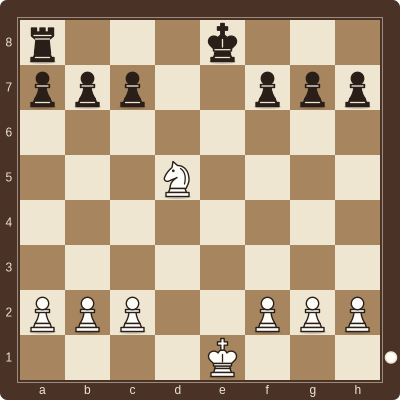
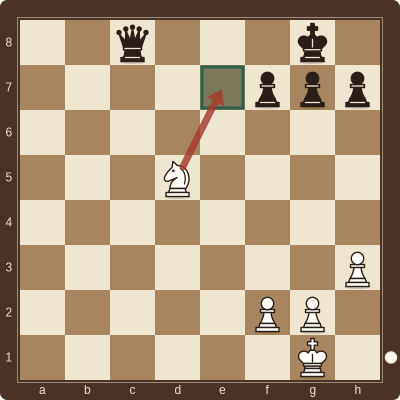
How a chess fork works, and how to set one up
Learn how one piece attacks two targets at once: knight, pawn, queen and king forks, when a fork really works and how to stop one.
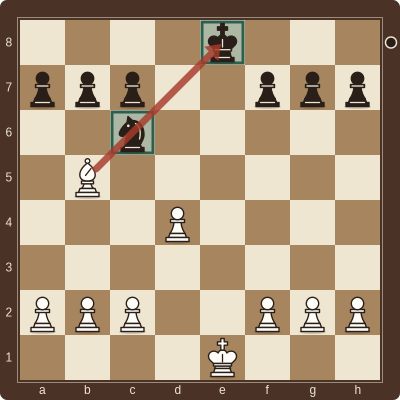
Absolute and relative pins, and how to use them
Learn the difference between absolute and relative pins, how to pile up on a pinned piece with a pawn and how to break free from a pin.
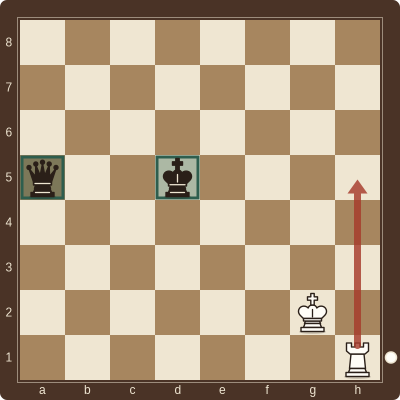
How a skewer wins the piece standing behind
See how a skewer hits the stronger piece first and wins what stands behind it, with rook, bishop and queen examples and a pin comparison.
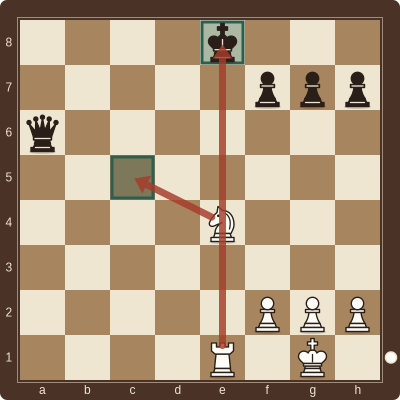
Discovered attacks: when one piece unveils another
Learn how a discovered attack works: build a battery, move the front piece with a threat, use discovered check and see how to defend.
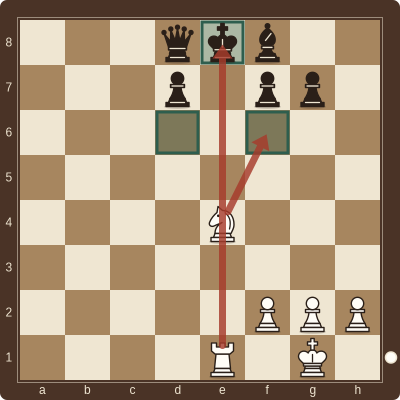
Double check: two attackers, one kind of reply
Understand double check: how a discovery creates it, why blocking and capturing fail, mating examples and when the king itself can capture.
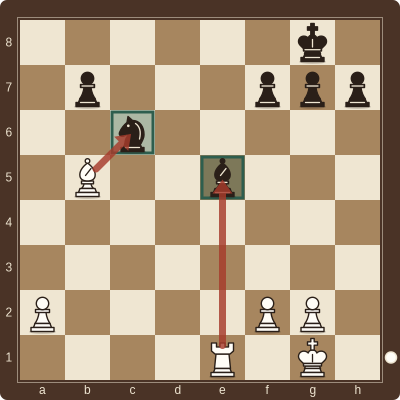
Removing the defender: take the guard first
Find what each enemy piece guards, then capture it or chase it away before taking the target. Clear examples, move order and common traps.
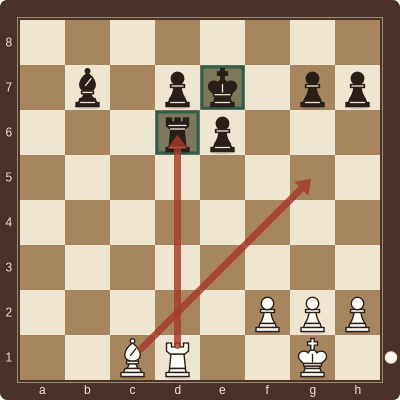
Deflection and decoy: making their pieces move
Deflection pulls a defender off its job, a decoy drags a piece onto a bad square. Learn both with checks, examples and a test for refusals.
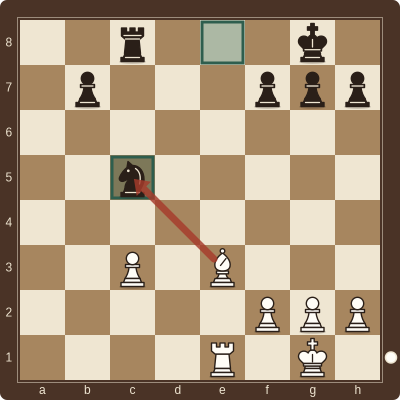
Overloaded pieces: how to spot a guard with two jobs
Spot a queen or rook with too many duties, test each one with a capture or check, and learn how the defender can share the load.
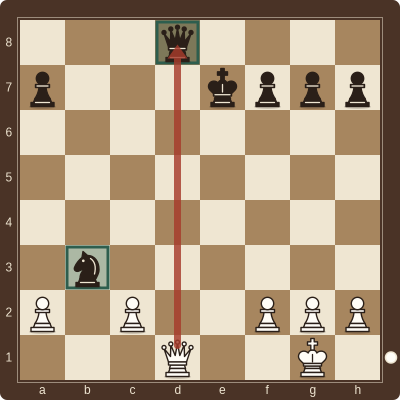
The in-between move: do not recapture on autopilot
A zwischenzug inserts a check or bigger threat before the expected recapture. Learn to find it for both sides with a move-order checklist.